


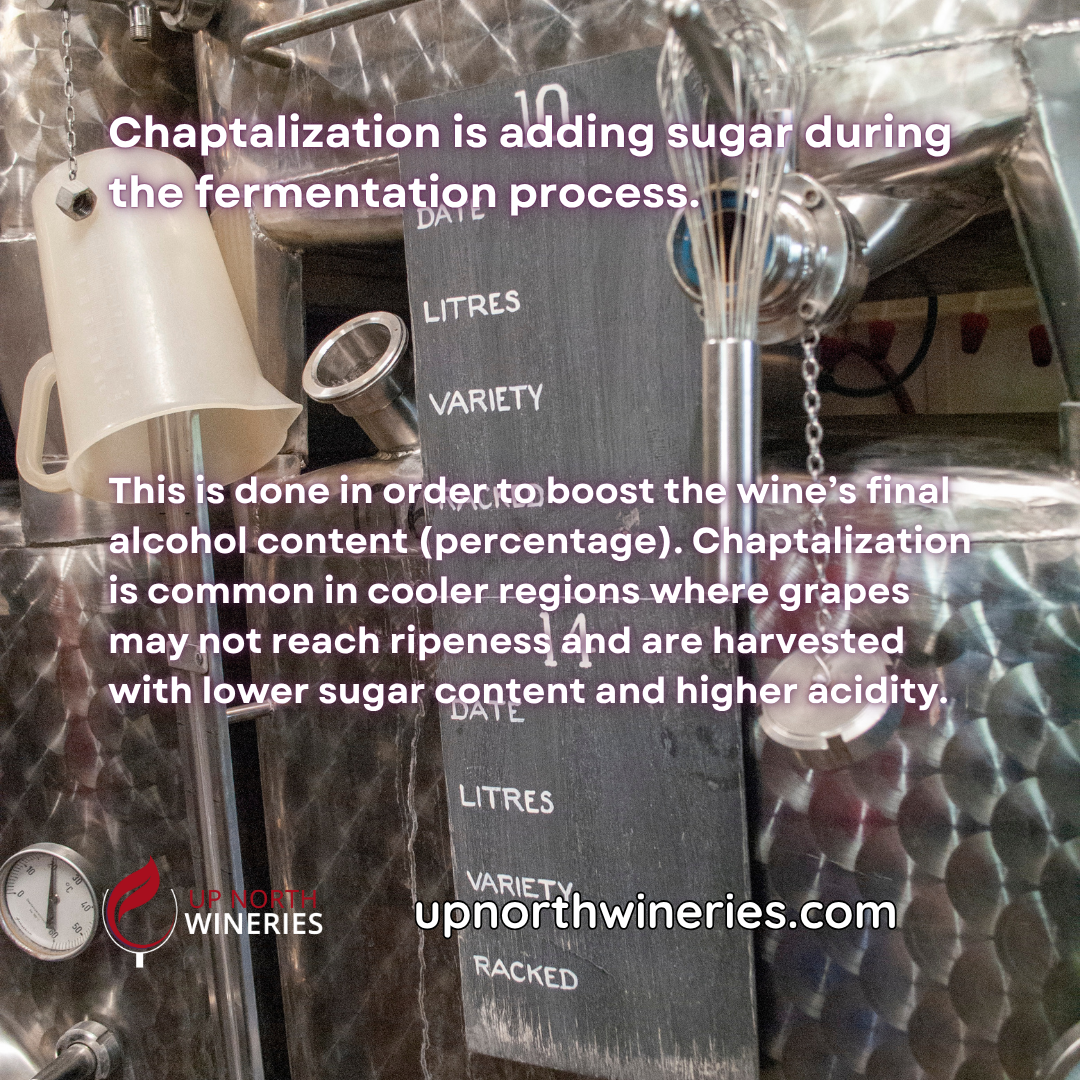
Winemaking is as much an art as it is a science, and sometimes Mother Nature needs a little help. Enter chaptalization—a process named after French chemist Jean-Antoine Chaptal. The process involves adding sugar to grape juice before fermentation. While the concept might raise an eyebrow or two, it’s not about making the wine sweeter; it’s about ensuring that the final product has the right alcohol content, particularly in cooler climates where grapes may not ripen fully.
Why Add Sugar?
In regions like Northern Michigan, Oregon, and parts of Europe, grape-growing conditions can be unpredictable. Cooler temperatures can result in under-ripened grapes with lower natural sugar content, which means less fuel for fermentation. By adding sugar, winemakers give yeast the boost it needs to produce enough alcohol, balancing out acidity and enhancing the wine’s structure.
How It Works
The process is straightforward. Before fermentation begins, a carefully measured amount of sugar (often cane or beet sugar) is mixed into the grape must. Yeast then converts this sugar into alcohol, increasing the final alcohol content without affecting the sweetness of the wine. The key is precision—too much sugar can lead to an overpowering wine. Too little may leave it lacking depth.
Where Chaptalization is Used
Chaptalization is common in classic wine-producing regions like France, Germany, and New Zealand. It is also done in some U.S. states, including Michigan. However, it’s a regulated practice—different regions have limits on how much sugar can be added to prevent excessive manipulation of the wine’s natural profile. In California, for example, chaptalization is outright prohibited, but winemakers can use grape concentrate instead.
Controversy & Alternatives
The process isn’t without its critics. Some argue that chaptalization allows winemakers to prioritize quantity over quality, encouraging overproduction of grapes that wouldn’t naturally ripen. In response, some producers are experimenting with alternative methods like selecting yeast strains that thrive in lower sugar environments or adjusting fermentation techniques to achieve the desired balance.
A Tool, Not a Trick
At the end of the day, chaptalization is simply another tool in the winemaker’s toolkit. In cooler-climate regions like Northern Michigan, it ensures that every vintage reaches its full potential—producing wines that are well-balanced, flavorful, and enjoyable. So the next time you sip a crisp Michigan Riesling or a structured Pinot Noir, you might just be tasting the science behind the art.
 Marisa Fancy along with her husband and four children dreamt of moving “Up North”. They had vacationed for years in northern Michigan and in 1995 they finally made the move.